Understanding the Seriwa Keynote Template: A Professional Analysis
When evaluating presentation templates, professionals often look beyond superficial aesthetics to consider workflow efficiency, adaptability, and long-term value. The Seriwa Keynote Template is frequently mentioned in this space, described as a clean, scalable, and multipurpose tool suitable for business, pitch decks, e-commerce, or product promotion. This analysis explores its distinct characteristics, compares its approach to general template design principles, and examines the practical decision factors involved in choosing such a resource.
What Distinguishes the Seriwa Keynote Template
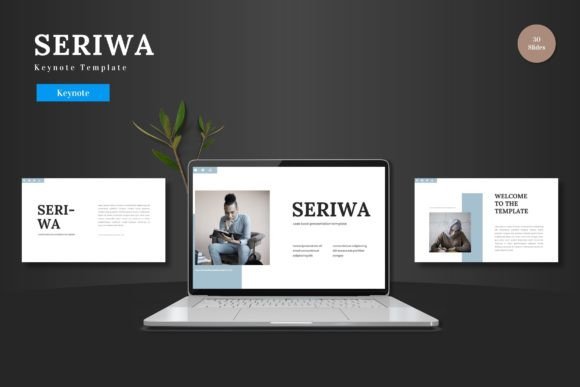
The core proposition of the Seriwa Keynote Template is its commitment to a streamlined, software-specific workflow. A key stated feature is that all elements are editable directly within Keynote, with no need for ancillary software. This means editing shapes, inputting content, replacing images via placeholder, and changing colors are all conducted within the native application. For users who prioritize working within a single ecosystem to maintain focus and reduce compatibility issues, this is a significant design consideration.
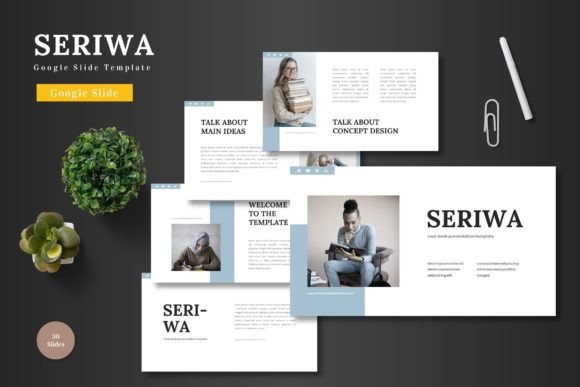
The template offers substantial volume with 150 total slides, organized across 5 premade color variations—30 slides for each. This structure provides not just variety, but a systematic approach to maintaining visual coherence across different sections or presentation themes. Components like section break slides, handcrafted infographics, and pixel-perfect illustrations are crafted to be resizable and editable, which speaks to an emphasis on flexibility rather than static, fixed designs. The inclusion of animated slides also adds a dynamic layer without requiring the user to build animations from scratch.
Evaluating the All-in-One Editing Philosophy
A major point for comparison when selecting templates is the required toolchain. Many premium templates, especially those labeled as "multipurpose," often involve assets created in external vector software. While this can result in highly intricate graphics, it sometimes necessitates opening another program like Illustrator or Affinity Designer to modify core elements. The Seriwa Keynote Template's claim of complete in-app editing presents a different tradeoff.
Its strengths are clear: reduced software overhead, a unified editing experience, and likely faster iteration cycles for content changes. This approach is best-fit for individuals or teams whose primary and exclusive presentation tool is Apple Keynote. It aligns with a practical need for agility, especially when last-minute changes are common. However, a potential limitation surfaces if a user desires extremely specialized graphic manipulation that Keynote's native toolset cannot provide. In such cases, a template that provides original source files for external graphic software might be a more suitable alternative, even if it complicates the workflow.
Considering Scale and Color Systematization
The offering of 150 slides across 5 color schemes is not merely about quantity. It represents a methodical design system. Having 30 slides per color variation allows a user to commit to a single color palette for an entire presentation series—be it for a brand, a product line, or a quarterly business review—ensuring visual consistency. This contrasts with templates that offer a larger single set of slides but only one dominant color theme, forcing the user to manually recolor every element if a different palette is needed.
For users comparing options, this systematization reduces the hidden cost of manual adjustment. It is particularly beneficial for organizations that present across different departments or projects but wish to maintain a unified corporate look with slight thematic variations. The tradeoff is that mastering and navigating such a large slide library requires initial familiarization. Users who prefer extremely minimalist, bespoke presentations with under 20 slides might find the volume overwhelming, though the editable nature means they can simply delete unused slides.
Practical Use Cases and Realistic Applications
Understanding when the Seriwa Keynote Template is the right choice involves examining real-world scenarios. Its multipurpose claim suggests suitability for business proposals, investor pitch decks, e-commerce product catalogs, and promotional launches. The inclusion of gallery and portfolio slides, with drag-and-drop picture placeholder functionality, is a tangible benefit for photographers, designers, or any professional showcasing visual work.
For example, a startup founder developing a pitch deck might value the pre-structured infographics and animated slides to explain growth metrics or user journey maps without spending days on design. Conversely, a corporate marketing team creating a highly technical, data-heavy internal report might prioritize different tools. They might need deeper data visualization integration from Excel or BI tools, which might be beyond the scope of any pre-designed template. In this case, the Seriwa Keynote Template's strengths in visual storytelling and branding might be less critical than its capabilities for raw, complex data charting.
The Decision Factor of File Structure and Deliverables
The main file inclusion of 5 PPTX files in a widescreen format is a notable detail for cross-platform considerations. While the template is built for and edited in Keynote, the provision of PowerPoint files indicates an understanding that the final presentation may need to be delivered or presented in a different environment. This expands its utility in mixed-software workplaces.
When comparing resources, professionals should examine not just the design but the deliverable formats. Some templates are exclusive to one format; others provide cross-compatible files. The Seriwa Keynote Template's inclusion of PowerPoint files addresses a common practical hurdle: the need to share with colleagues or clients who use PowerPoint. The tradeoff is that the editing experience and fidelity are optimized for Keynote; the PowerPoint versions are likely for final delivery, not for extensive re-editing. Users whose entire workflow is PowerPoint-native would be better served exploring templates designed and optimized within that ecosystem from the outset.
When to Consider Alternatives
No single template is universally optimal. The Seriwa Keynote Template may be an excellent choice for users who: operate primarily within Apple Keynote, require a high volume of professionally designed slides with consistent color systems, value the efficiency of all-in-app editing, and need multipurpose flexibility for various presentation types.
Readers might need to explore another option if their requirements include: extremely niche or industry-specific slide structures not covered by multipurpose templates, a primary need for real-time data-linked charts that auto-update, a workflow deeply embedded in PowerPoint with no use of Keynote, or a preference for building presentations from a much smaller, more foundational set of master slides. Furthermore, individuals who present only rarely and need a very simple, quick solution might find the extensive features of a large template like Seriwa to be more than necessary, opting instead for a more basic or free alternative.
Making an informed decision involves balancing these factors. The Seriwa Keynote Template’s design philosophy—emphasizing a cohesive, editable, and scalable system within Keynote—offers a distinct path for creating quality presentations efficiently. By understanding its structured approach, its strengths in workflow consolidation, and its inherent tradeoffs against more specialized or platform-diverse tools, professionals can better assess whether it aligns with their specific operational needs and presentation goals.