Tender Breasts Pregnancy Symptom Infographic: An Asset Analysis
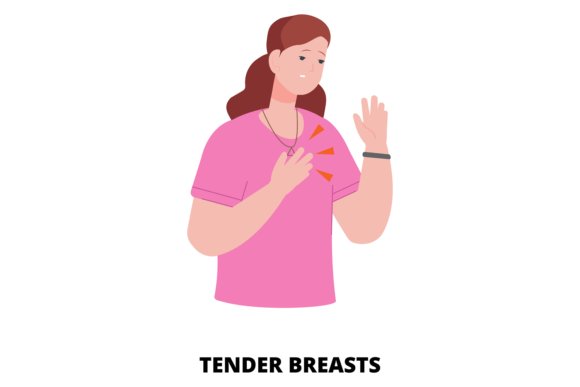
In the realm of health education and personal wellness, visual tools serve a critical role in bridging complex information and user understanding. One such resource is the Tender Breasts. Pregnancy Symptom Infogr—a digital graphic asset focusing on the specific symptom of breast tenderness during pregnancy. This infographic, available in multiple formats including EPS, JPG, SVG, and transparent PNG, presents an isolated visual on an irritated skin depiction against a white background. Its value lies not as a medical diagnostic tool, but as a concise, illustrative reference point for creators, educators, and healthcare communicators.
Key Characteristics and Practical Utility
The core purpose of the Tender Breasts Pregnancy Symptom Infogr is to provide a clear, standardized visual representation. It takes a common yet often surprising early pregnancy sign—breast tenderness and skin irritation—and abstracts it into an iconographic form. The choice of an isolated graphic on a plain background is a significant strength. This isolation ensures the asset is immediately usable; it requires no cropping or complex manipulation to be integrated into a larger design layout. The availability of vector (EPS, SVG) and raster (JPG, transparent PNG) formats offers substantial flexibility for different project needs. A vector file allows for infinite scaling without quality loss, essential for print materials or large displays, while the raster files provide quick-use options for digital publications and web graphics.
Assessing Real-World Application and Quality
In practical use, the effectiveness of this asset hinges on its clarity and thematic consistency. The visual presentation of irritated skin is a symbolic representation. It communicates the concept of tenderness and sensitivity effectively to a viewer familiar with the topic. For a professional creating a patient pamphlet, a blogger writing a pregnancy wellness guide, or an educator developing a prenatal health module, this infographic can serve as a consistent visual anchor. Its reliability is in its simplicity: it delivers a single, focused message without extraneous detail that could confuse the primary information.
The long-term value of such an asset is tied to its reusability and format diversity. A freelance graphic designer might use the SVG file in a custom-built interactive web resource for a client’s healthcare site. A small business owner running a parenting blog could embed the transparent PNG directly into multiple articles without a disruptive background. The consistency across the different file versions ensures that regardless of the chosen format, the core visual message remains intact, maintaining brand or informational coherence across various mediums.
Primary Audience and Beneficial Scenarios
This infographic is a niche asset with a clear target beneficiary group. It is most useful for content creators and communicators within the health, wellness, and parenting spheres. This includes:
- Healthcare Marketers and Publishers: Developing educational materials for clinics, obstetric offices, or wellness apps.
- Bloggers and Freelance Writers: Enhancing articles on early pregnancy signs with professional, royalty-free visuals.
- Educators and Trainers: Creating slides or handouts for prenatal classes or health education courses.
- Small Business Owners: Such as those running boutiques or services for new parents, needing visuals for their informational content.
The asset fits situations requiring a quick, authoritative visual to support explanatory text. It is not a standalone educational piece but a component. For example, in a blog post listing early pregnancy indicators, using the Tender Breasts Pregnancy Symptom Infogr next to the relevant paragraph can improve reader engagement and comprehension far more than text alone.
Professional Observations and Limitations
A balanced evaluation must consider potential limitations. The infographic is a symbolic representation; it does not depict anatomical detail or medical accuracy. It is an illustration of the sensation or experience of tenderness, not a clinical diagram. Therefore, its use should be confined to informational and supportive contexts, never for diagnostic purposes. Its effectiveness is also dependent on the user's design environment. A creator without basic software to handle EPS or SVG files might only utilize the JPG or PNG, slightly limiting the scalability benefit.
Furthermore, the value is maximized when the asset is part of a larger series. If this infographic is one of many covering various pregnancy symptoms, its utility and coherence increase dramatically. Used alone, it still serves a purpose, but its impact is part of a broader visual communication strategy.
Integration into Workflow and Project Goals
Deciding if the Tender Breasts Pregnancy Symptom Infogr fits your needs involves evaluating your project's communication goals and production workflow. If your aim is to create clear, visually-supported content on prenatal health for a non-specialist audience, this asset can be a efficient solution. It saves time searching for or creating a custom image, and the multiple file formats accommodate different stages of production—from web design (using PNG) to potential future large-scale printing (using EPS).
For the serious hobbyist running a detailed pregnancy journal website or an educator building a resource library, the infographic offers a reusable, reliable visual. Its professional presentation elevates the perceived quality of the final content. However, if your project requires highly detailed medical imagery or audience-specific cultural representations, this isolated, symbolic graphic may be too generic. It serves a broad, practical purpose rather than a deeply customized one.
In summary, the Tender Breasts Pregnancy Symptom Infogr is a purposeful digital asset with defined strengths in format flexibility, immediate usability, and thematic clarity. Its practical value is realized when integrated as a supportive visual element by creators and educators aiming to explain or highlight this specific pregnancy symptom. By understanding its role as a component rather than a comprehensive tool, professionals can effectively leverage it to enhance the accessibility and visual coherence of their health communication projects.