FoundryX Startup Presentation: Planning, Clarity, and Strategic Storytelling
Most startup presentations fail before the first slide appears. The reason is rarely the lack of a beautiful template; it is the absence of deliberate planning and a clear understanding of what you need your audience to feel, remember, and do. The FoundryX Startup Presentation enters this landscape not as a miracle solution, but as a carefully structured resource that can reduce friction between an idea and its effective communication. Used thoughtfully, it helps founders, marketers, educators, and creative professionals translate complex concepts into a visual narrative that respects the listener’s time and intelligence.
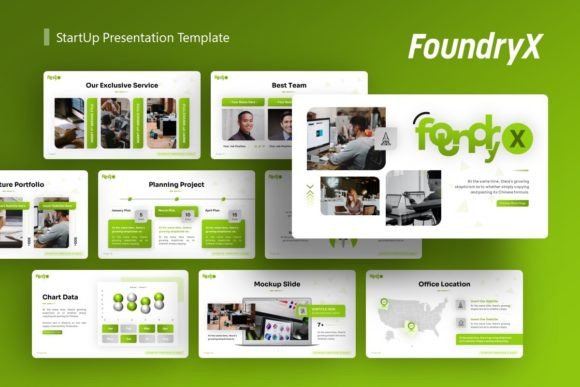
What makes this particular tool worth examining is its origin as a flexible framework rather than a rigid, one-note design. The package includes 36 distinct slides, each built on master slides for stability, and accompanied by handcrafted infographics, pixel-perfect illustrations, and drag-and-drop picture placeholders. While many presentation templates promise versatility, FoundryX Startup Presentation was assembled to serve multiple contexts—investor pitch decks, internal company profiles, creative agency portfolios, or even personal brand showcases. That breadth matters because it mirrors how real work happens: the line between a startup pitch and a corporate update often blurs, and having a consistent visual system across formats saves time while protecting brand integrity.
The Strategic Layer Beneath the Slides
Before customizing a single element, it helps to understand why visual structure influences decision-making. A pitch deck or company profile is not merely information shared; it is an experience shaped by sequence, emphasis, and the relationship between text and imagery. FoundryX Startup Presentation, with its master slide architecture and resizable graphics, supports this by allowing you to build a logical flow without fighting the tool. When you rely on a template that respects hierarchy—where headlines, data points, and supporting visuals are already balanced—you can focus on the harder work of refining your message.
Consider the founder preparing for a seed round conversation. The instinct is often to cram every market statistic and product feature into the deck. A more strategic approach uses the template’s infographics to isolate three key data narratives, while the clean placeholder system lets the founder introduce team members or traction milestones with images that land emotionally. The FoundryX Startup Presentation does not replace investor storytelling; it simply removes the noise so that story can be heard.
When the Tool Becomes a Decision-Making Aid
There is a subtle shift that occurs when you stop treating a presentation as a document and start treating it as a planning instrument. For a small business owner mapping out a new service line, populating the company profile slides inside FoundryX can expose gaps—missing value propositions, unclear audience definitions, or inconsistent brand voice. The act of filling in placeholders with real content is diagnostic. If a section feels forced, perhaps the strategy behind it needs more work. In this sense, the template becomes a lightweight strategic audit, pushing you to clarify what you offer and to whom.
Similarly, a freelance photographer or creative director using the portfolio variant of the FoundryX Startup Presentation can sequence projects to tell a growth story. The handcrafted infographics allow for showing repeat client rates or geographic reach without overwhelming the visual work itself. Because all graphic elements remain resizable and editable, the narrative can prioritize what the creator wants to sell next, not just what they have done in the past. That intentional sequencing separates a random slide collection from a persuasive business tool.
Planning Your Communication Before You Touch a Slide
A common mistake across industries is to open a template and immediately start filling it with existing material. The better path is to spend 30 minutes defining the single outcome you want from the presentation. Are you seeking a second meeting? Gaining budget approval? Inspiring a team? Only when that outcome is clear should you begin adapting the 36 slides in FoundryX. Each slide then earns its place: maybe six slides form the emotional hook, another eight present evidence, and the final four offer a concrete path forward. The risk of treating every available slide as necessary is clutter—a well-meaning template forced into a data dump.
The documentation file included with the download provides useful guidance on how to navigate the template efficiently. But true mastery comes from treating it as a canvas you edit with restraint. Remove slides that don’t serve the goal; combine elements from different layouts if you need a custom progression. Because the master slides keep typography and color consistent, this kind of editing rarely breaks the design—it actually strengthens originality.
Practical Use Cases That Show Subtle Power
To ground the conversation, think about a mid-career professional transitioning into consulting. They might use the FoundryX Startup Presentation to craft a personal portfolio that blends a corporate bio, case studies, and a forward-looking methodology. The availability of vector icons and pixel-perfect illustrations lends a polished credibility without requiring advanced design skills. Each segment can be tailored to a specific client vertical because the template’s bones stay recognizable yet adaptable.
In a different scenario, an established agency preparing a quarterly business review for a key client can leverage the infographic capabilities to turn spreadsheets into memorable visual stories. Instead of dense tables, the team presents retention rates, campaign performance, and survey results through shapes that are meaningful at a glance. The drag-and-drop picture placeholders accelerate the process of inserting screenshots or team photos. What might have taken two days of formatting now takes a focused afternoon, leaving more energy for the actual conversation during the meeting.
For startup accelerators or university incubators, the FoundryX Startup Presentation offers a standardized but not generic visual language for multiple ventures. Teams across different stages can use the same core file, yet the output feels personalized because color accents, photo treatments, and content hierarchy are easy to modify. That balance between cohesion and individuality supports cohort branding while respecting each founder’s distinct voice.
Recognizing the Risks of Template-First Thinking
No template, no matter how well-crafted, can substitute for strategic clarity. If a user approaches the FoundryX Startup Presentation without first defining the problem they solve, the audience they serve, and the evidence that supports their claim, the result will be visually pleasant but substantively empty. This is the template-first trap: assuming that a clean design will mask a weak argument. It rarely does, especially with sophisticated audiences like investors, board members, or discerning clients. The slides amplify what already exists—they do not invent rigor.
Another risk emerges when users treat the included images and iconography as final assets. The documentation clearly states that all images shown in the demo serve preview purposes only and are not part of the downloaded file. This is a practical consideration, not a flaw. It means every user must consciously source photography or graphics that align with their brand truth. Skipping this step and settling for generic visuals undermines the authenticity that the template otherwise supports.
Customizing for Credibility and Long-Term Use
The editable nature of the graphics in FoundryX is perhaps its most underrated strategic feature. When you adjust colors to match your brand palette exactly, or resize an infographic to emphasize a metric that truly matters to your narrative, you are building a custom communication asset out of a solid foundation. Over time, this leads to a consistent visual language that audiences begin to trust. Whether you are a blogger turning a post into a slide deck for a speaking engagement or a publisher creating a media kit, consistency signals professionalism.
One often-overlooked advantage is the .PPTX file format itself. It runs in familiar environments, and teams can collaborate without steep learning curves. When an educator adopts the FoundryX Startup Presentation to structure a course overview, the master slides keep the look unified even as multiple teaching assistants contribute content. The template adapts to the process, rather than forcing the process to adapt to the tool.
Moving From Random Use to Intentional Investment
The decision to use a startup presentation framework should be tied to a specific goal or recurring need. If you find yourself repeatedly starting from scratch, losing hours to alignment and color tweaks, or delivering presentations that feel inconsistent, then a resource like FoundryX merits serious consideration. It is less about a one-time cosmetic upgrade and more about establishing a repeatable system that elevates your communication standards. The 36 slides become a vocabulary—you choose only the words that fit the moment.
Before purchasing or adopting any template, ask yourself: What do I want my audience to understand after the last slide? What evidence will I show that supports that understanding? How will I adapt the content for different listeners without rebuilding from zero? When you answer those questions honestly, the features of FoundryX—customizable infographics, picture placeholders, master-slide consistency—become practical levers rather than marketing bullet points.
Building Confidence Through Preparation, Not Polish
Ultimately, the FoundryX Startup Presentation serves those who see communication as a craft. It offers a structured starting point for people who respect their own time and the attention of their audience. The template will not write your vision statement, unearth customer insights, or generate a financial model. But it will hold the space for those elements with clarity and composure, so that when you present, the focus stays on what you are building, not on the mechanics of slide construction.
Entrepreneurs, freelancers, and seasoned executives alike benefit when they treat tools like this as part of a broader preparation ritual. Gather your data. Simplify your narrative. Then let the design framework eliminate the friction between your ideas and the screen. In that sequence, the FoundryX Startup Presentation becomes less a purchase and more a partnership in clearer thinking.